
Is Your Body Ready for Running or Riding Season?
A 5-Test Spring Readiness Screen
Spring is exciting.
Longer days. Drying roads. Dirt instead of snow. Mileage creeping back in.
But every year, we see the same pattern at Burlington Physical Therapy: athletes ramp up volume before their tissues are ready to tolerate it.
The issue isn’t motivation.
It’s capacity!
Before you increase mileage or saddle time, use this simple 5-test readiness screen to see whether your body is prepared for the demands of running and biking season.
If you want a more comprehensive evaluation, you can always schedule an individual performance assessment. But start with this!
mobility foundations: 2 Tests
ankle dorsiflexion: knee-to-wall test
The Test:
Use a wall or box. Half kneel position, shoes off for the test!
Place your hand (pinky side) up against the wall, fingers together, and bring your big toe to your thumb.
Move your hand away and bring your knee towards the wall.
The Goal:
Your knee should touch the wall WITHOUT your knee caving in OR your heel lifting
Why it Matters:
For Runners: Limited ankle mobility reduces shock absorption and increases strain on the Achilles tendon and knee.
For Riders: Restricted dorsiflexion can influence knee tracking, pedal stroke mechanics, and the ability to heel drop during descents which is especially important for our mountain bikers!
If one side is noticeably tighter, something else will compensate.
hip flexion: self-thomas test
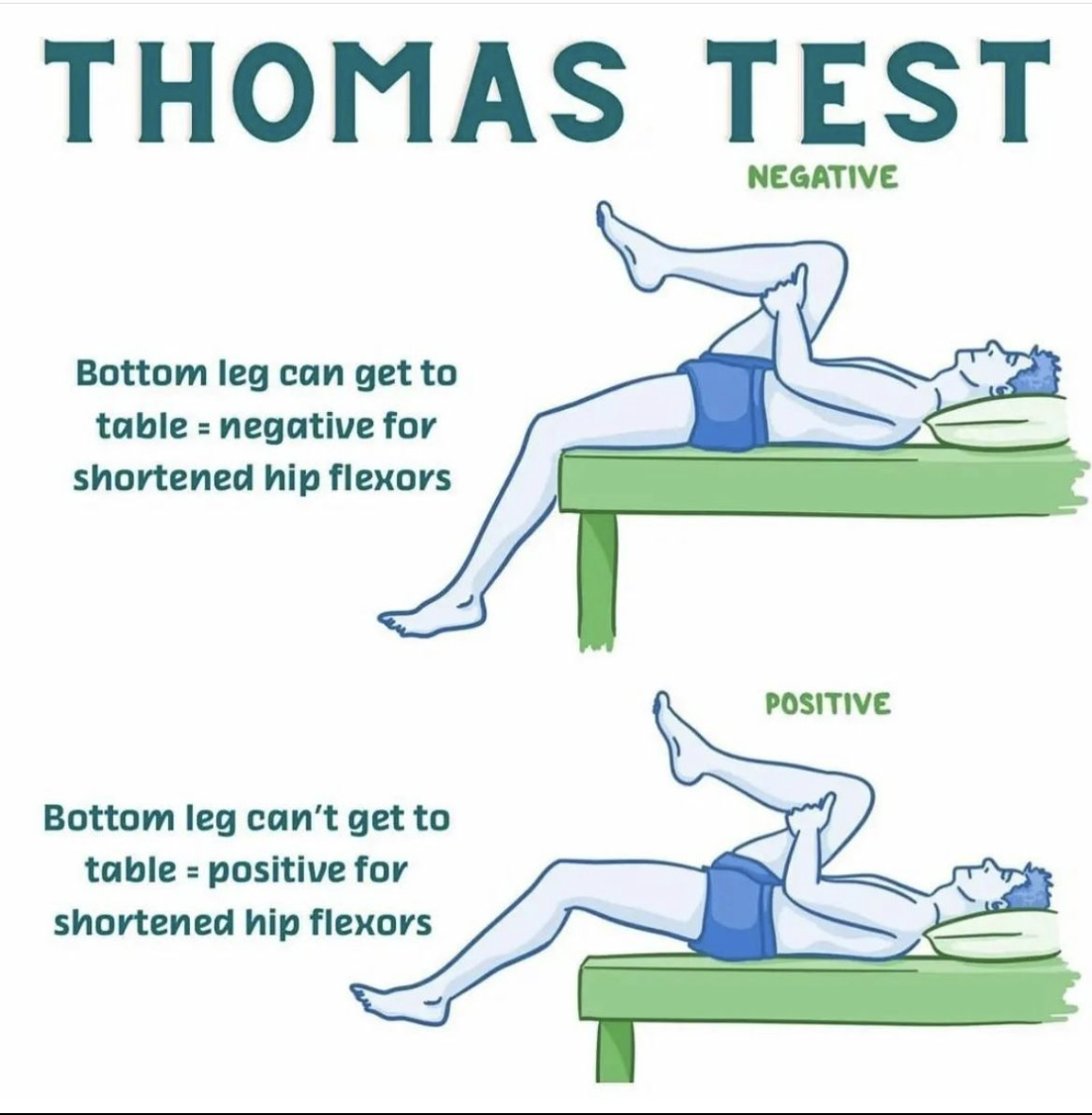
The Test:
Sit at the edge of a table or firm surface.
Lie back while holding one knee to your chest; your lower back should stay pressed into the table/firm surface.
Let the opposite leg hang relaxed.
The Goal:
Knee drops below or to parallel to the table (think knee is level or lower than the hip joint)
Knee stays bent around 80–90°…we are acknowledging that this is challenging for our riders!
Why it Matters:
Runners: need hip extension for efficient stride mechanics.
Cyclists: spend hours in hip flexion. Chronic tightness here often shifts load into the low back or anterior hip during longer rides.
If hip extension (because your hip flexors are so tight) is limited, mileage increases will expose it.
STRENGTH foundations: 2 Tests
Elevated Hamstring Bridge: 21 reps/side
The Test:
Place your heel on a bench or box, ~17-18” surface
Lift into a single leg bridge.
The Goal:
21 controlled reps PER side.
Watch for:
Early fatigue
Hamstring cramping
Hips dropping or rotating
Why it Matters:
Your posterior chain controls deceleration and stabilizes repetitive movement.
Running and cycling both require sustained hamstring endurance. If one side fatigues early, load shifts elsewhere.
single leg squat to surface (17-18”): 10 reps per side
The Test:
Stand in front of a box or bench (~17–18”).
Tap lightly and stand back up.
The Goal:
10 controlled reps per side.
Watch for:
Knee collapsing inward
Trunk leaning excessively
Major side-to-side differences
Loss of balance
Why it Matters:
Both running and cycling are repetitive single-leg sports.
This test reveals control, strength symmetry, and load tolerance under fatigue.
sport specific: 1 test
running: single leg calf raises
The Test:
1 rep every 2 seconds
60-second window
The Goal:
You are looking for FULL range of motion, straight up and down, no bouncing or increased knee bending to lift your heel
Under 50 years old: 25+ reps
Over 50 years old: 20+ reps
Test each side
Why it Matters:
Your calves are shock absorbers and propulsion engines.
If you can’t meet this threshold, your Achilles tendon, plantar fascia, or knee may take on more stress as mileage increases.
biking: superman Holds
The Test:
Lie face down.
Lift arms and legs slightly off the floor.
The Goal:
Hold for at least 60 seconds.
Watch for:
Inability to maintain your start position (chest and arms lower before 60sec is up)
Glutes not engaged (ie, your lower back is screaming at you)
Shaking before 30 seconds
Why it matters:
Cycling demands sustained trunk endurance — especially during long gravel efforts, climbs, and descents.
If trunk endurance is limited, form breaks down late in rides.
What Do the Results Mean?
Passing these tests does not guarantee you won’t get injured.
Failing one does not mean you will.
But significant asymmetries or early fatigue are signs your body may not be ready for a rapid increase in training load.
Spring injuries are rarely dramatic.
They’re usually capacity mismatches!
Want a Deeper Breakdown?
If you’d like a more detailed look at your movement quality, strength symmetry, or run mechanics, we have:
A Mini Run Assessment Event Coming Up: March 9
Full performance evaluations: available anytime!
Sport-specific strength class series: Ready to RUN (March 9) and Ready to RIDE (March 18)
You can explore options or schedule a free discovery call to chat about what might be right for you.
Prepare your body before you push it.
Your future self — mid-season — will thank you!
-THE BPT TEAM